Travel guide · Beyond Bali
Jakarta
Jakarta is a vast urban region on Java’s northwest coast, shaped by trading-port history, colonial buildings and many living communities. A heritage visit moves between distinct districts rather than one compact old centre. Kota Tua, Glodok and the mosque-and-cathedral area reveal different parts of that story.
- Kota Tua & Fatahillah Square
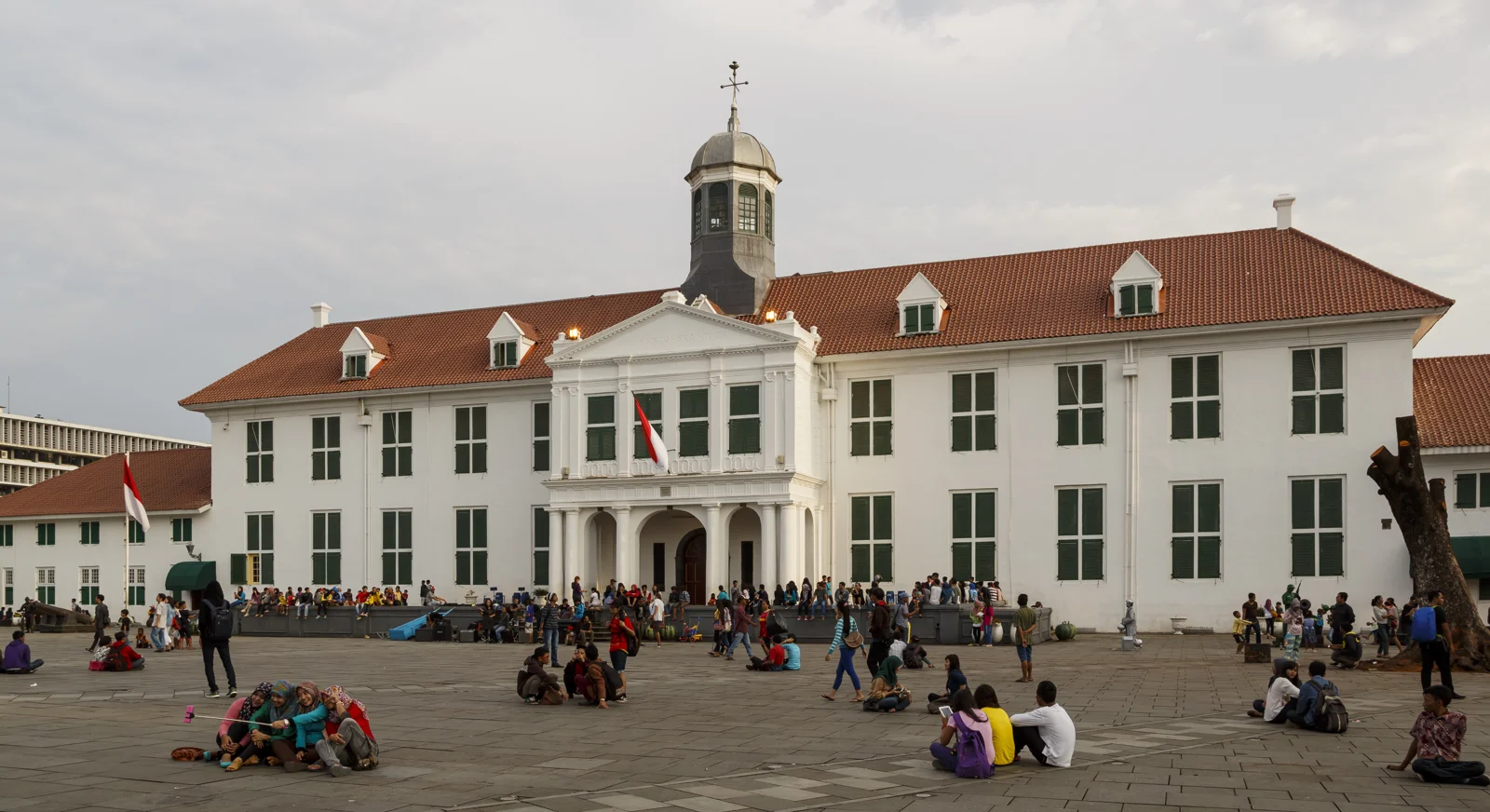
- The former Batavia civic centre gathers colonial-era buildings around Fatahillah Square. The Jakarta History Museum occupies the former city hall pictured here; the nearby Wayang Museum adds a different perspective through puppetry. Check each museum’s current visitor arrangements. Source: Indonesia Travel — Jakarta history
- Istiqlal & Jakarta Cathedral
- Istiqlal Mosque and the Catholic Cathedral stand near one another in central Jakarta. They remain places of worship, not interchangeable sightseeing interiors. Dress respectfully, follow the staff’s guidance and confirm visitor access around services. Source: Indonesia Travel — Istiqlal
- Glodok & Dharma Bhakti
- Glodok’s markets and streets reflect Jakarta’s Chinese-Indonesian heritage. Vihara Dharma Bhakti is a real religious site in the district; enter quietly where permitted, give worshippers space and ask before photographs. Source: Indonesia Travel — Glodok and historic temples
- Choose a district, not a checklist
- Leave time for traffic, heat and museum visits. Plan Kota Tua and central Jakarta as separate stops if that makes the day more manageable; no transfer time, opening schedule or guided offering is guaranteed here.
Who It Suits
- Urban history explorers
- For museums and Kota Tua’s former colonial centre, with time for the city’s traffic and tropical heat.
- Architecture & faith
- For mosque and cathedral visits that respect worship, dress requirements and current visitor arrangements.
Trip planning
Kingdom's property listings cover Bali only. Ask about planning a trip to Jakarta.
Ask about JakartaBali Guide
Explore more Indonesian cultural destinations.
ExploreKingdom does not list properties outside Bali.